
Compare the Lineup
Pick the right GC-UV configuration.
All four INSCAN platforms share the same sub-155 nm vacuum-UV core. Compare form factor, throughput, integration interfaces, and target applications side by side — and see further down how INSCAN's GC-UV stacks up against GC-VUV (vacuum ultraviolet), GC-MS, LC-MS, HPLC and GC-FTIR.
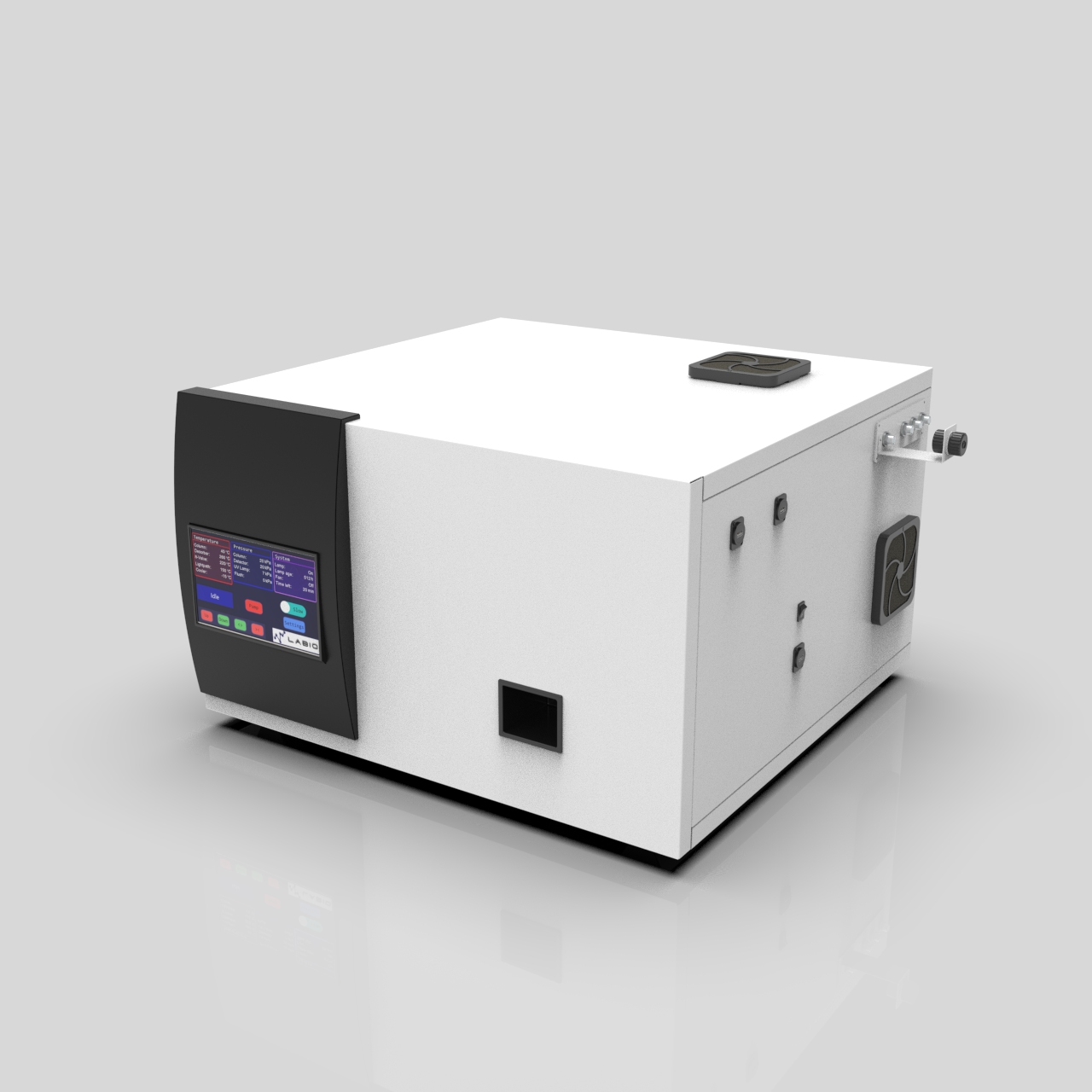
INSCAN
- <155 nm · Vacuum UV
- > 5 min · Typical runtime
- N₂ · Carrier gas
- ≤ 500 W · Power
INSCAN X
- 24/7 · Duty cycle
- BTEX · Validated
- IP54 · Enclosure
- < 3 min · Cycle time
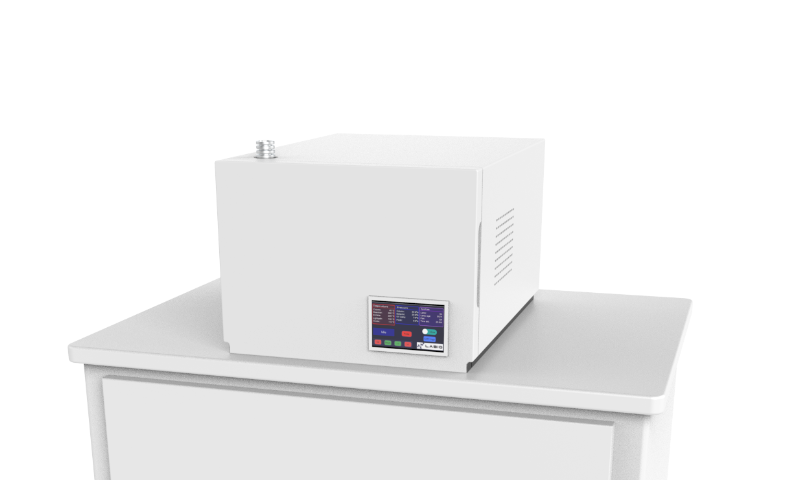
INSCAN LAB
- Benchtop · Footprint
- Open SDK · Method dev
- <155 nm · Vacuum UV
- Plug-in · GC modules
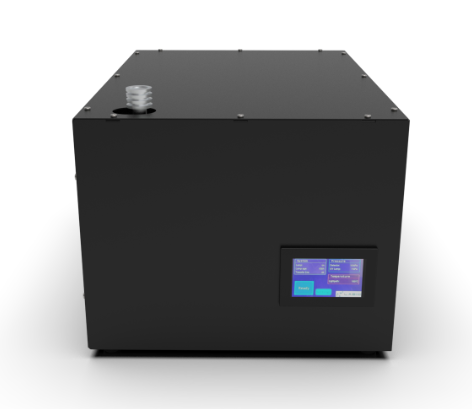
INSCAN OEM
- Module · Form factor
- TTL/RS-485 · Signal I/O
- Open API · Integration
- CE / FCC · Pre-certified
Technical Specifications
Side-by-side specs.
| Specification | INSCAN | INSCAN X | INSCAN LAB | INSCAN OEM |
|---|---|---|---|---|
| System | GC-UV INSCAN 176 injector system | — | — | — |
| Measuring principle | Gas chromatography with UV detection (GC-UV) | — | — | — |
| Detector spectral range | <155 – 330 nm | — | — | — |
| Application range cited in brochure | <155 – 330 nm | — | — | — |
| Analysis mode | Full-scan qualitative and quantitative analysis | — | — | — |
| Sample focus | Liquid samples introduced through integrated GC injector | — | — | — |
| Runtime | Typically > 5 min | — | — | — |
| Carrier gas | Nitrogen | — | — | — |
| Electrical supply | 230 V / 50 Hz | — | — | — |
| Power | ≤ 500 W | 100–240 V AC, 400 W | 100–240 V AC, 200 W | 24 V DC, 60 W |
| Connectivity | USB 1 plus dedicated USB 2 spectrometer port | — | — | — |
| Architecture | Integrated system with no vacuum pumps or external add-ons | — | — | — |
| Detector type | — | Deep-UV absorbance, ruggedized | Deep-UV absorbance, modular | Deep-UV absorbance OEM core |
| UV range | — | <155 – 330 nm | <155 – 330 nm | <155 – 330 nm |
| Flow cell | — | High-flow heated cell, 280 °C | Interchangeable, 200 °C | Customer-specified, OEM mount |
| GC compatibility | — | Process & lab GCs, split/splitless | All major lab GCs | — |
| Data rate | — | up to 100 Hz | up to 50 Hz | up to 200 Hz |
| Dimensions (W×D×H) | — | 650 × 720 × 540 mm | 380 × 420 × 240 mm | 180 × 220 × 95 mm |
| Operating environment | — | 5–40 °C, IP54 enclosure | 15–30 °C lab conditions | — |
| Software interface | — | Modbus TCP, OPC UA, INSCAN Suite | Python SDK, INSCAN Suite, CSV/JSON export | — |
| Host compatibility | — | — | — | Any GC chassis with 24 V supply |
| Signal output | — | — | — | TTL, RS-485, Ethernet, analog 0–10 V |
| Certification | — | — | — | CE, FCC Class A, RoHS |
GC-UV vs The Field
How GC-UV compares to other detection techniques.
Isomer-level identification, vacuum-free operation, and a lower total cost of ownership — here's how INSCAN's GC-UV stacks up against the analytical lab's incumbents.
| Criterion | GC-UV | GC-VUV | HPLC | GC-FTIR | LC-MS | LC-MS/MS | GC-MS |
|---|---|---|---|---|---|---|---|
| Detection principle | Vacuum-UV absorbance (<155–330 nm) | Vacuum-UV absorbance (125–240 nm) | UV/Vis, RI, fluorescence | Mid-IR vibrational absorbance | Soft ionization + m/z | Tandem MS, m/z + fragments | EI ionization + m/z |
| Wavelength / mass range | <155–330 nm | 125–240 nm | 190–800 nm | 4000–400 cm⁻¹ | 50–2000 m/z | 50–2000 m/z (MS²) | 10–1000 m/z |
| Structural isomer ID | |||||||
| Positional isomer ID (o-, m-, p-) | |||||||
| Molecular fragmentation | |||||||
| Vacuum required | |||||||
| Carrier / mobile phase | He / N₂ / H₂ | He (high purity) | Solvents (water, MeCN, MeOH) | He / N₂ | Solvents + buffers | Solvents + buffers | He (high purity) |
| Quantification model | Lambert-Beer (absolute) | Lambert-Beer (absolute) | Response factor | Beer-Lambert / library | MS calibration curve | MRM calibration | MS calibration curve |
| Sample throughput | 5–10 min | 10–20 min | 15–45 min | 10–20 min | 10–30 min | 10–30 min | 15–40 min |
| Typical detection limit | ppb | ppb | ppm–ppb | ppm | ppb | sub-ppb | ppb |
| Compound-class fingerprinting | |||||||
| Relative capex | Low–Mid | Mid | Low | Mid | High | Very high | Mid |
| Relative running cost | Low | Mid | Mid (solvents) | Low | High | Very high | Mid |
| Best-fit applications | Fuels, petrochem, isomers, process | PIONA, permanent gases | Pharma, food, large molecules | Functional groups, polymers | Pharma, proteomics, metabolomics | Trace quant, clinical, residues | Volatiles, environmental, forensics |
Capable Limited Not supported
Comparison reflects typical commercial configurations as of 2025; specific instruments may vary.
Not sure which fits?
Request a Consultation