


1985Journal of Chromatography A
Capillary gas chromatographic analysis with the far-UV absorbance detector
What it proves
Far-UV absorbance detection (168–330 nm) coupled to capillary GC delivers structure-selective response unattainable by FID.
We use strictly-necessary cookies to run gcuvanalysis.com, plus optional analytics cookies to understand how the site is used. See our Privacy Policy and Terms.
The patented* GC-UV detection platform that resolves what GC-MS cannot — for licensing and custom co-development.
*Proprietary GC-UV detection technology protected by pending and granted patents.
Take the Assessment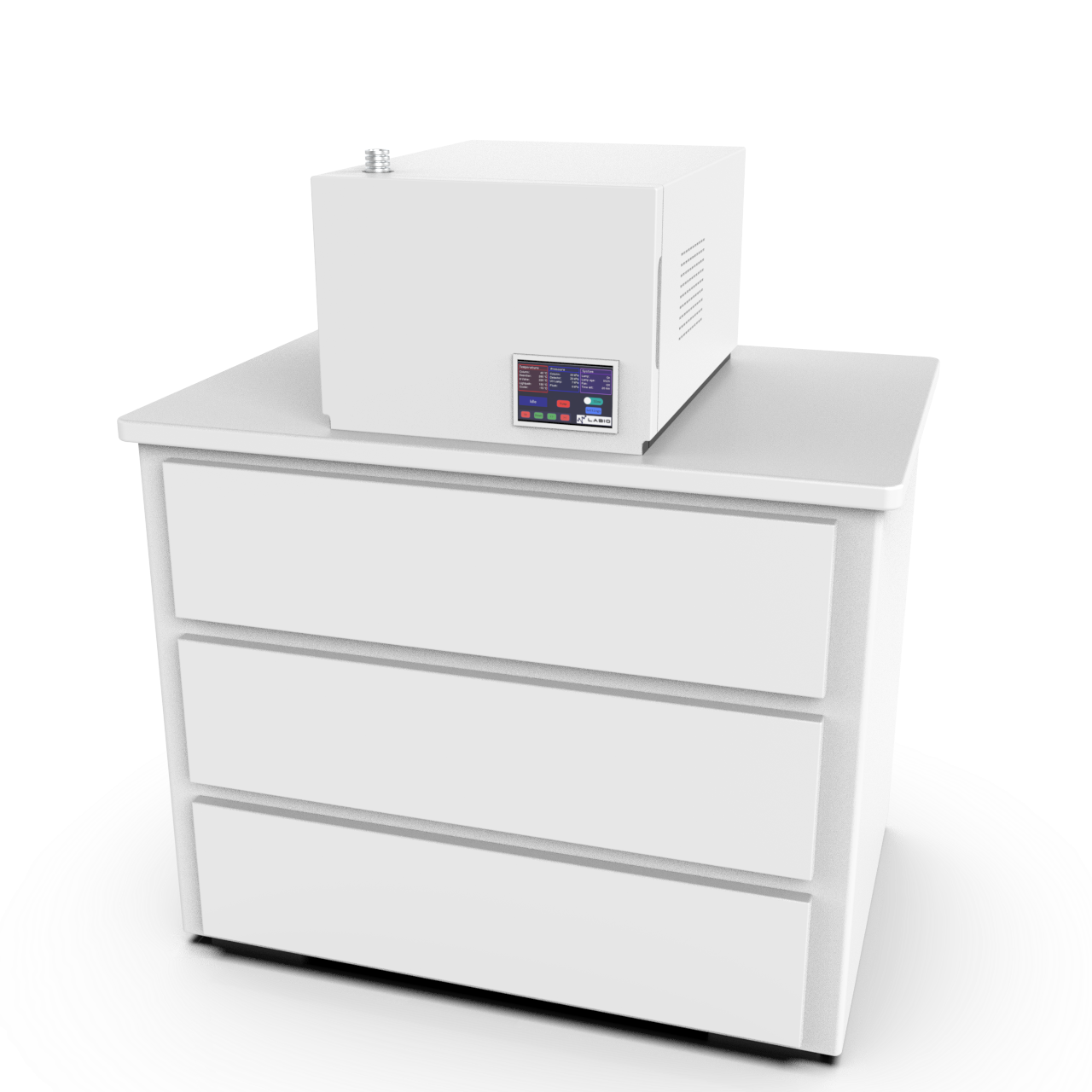
We make isomers visible.
Labio designs and licenses GC-UV reference platforms used by analytical labs, petrochemical QC, and instrument OEMs. Vapor-phase UV spectra paired with retention time resolve the structural isomers GC-MS cannot — without vacuum pumps, without compromise.
Wherever isomers must be told apart and trace species confirmed, our detectors enable the next answer in analytical chemistry.
Gas chromatography with ultraviolet detection (GC-UV) couples the separation power of capillary GC with vapor-phase UV absorbance spectra. Where mass spectrometry sees only mass, UV sees electronic structure — distinguishing positional isomers, double-bond geometry and aromatic substitution patterns that traditional detectors cannot resolve. The result: confirmatory identification, library- matched spectra, and quantitation at trace levels across pharma, petrochemical, environmental and forensic workflows.

Indexed mentions of gas chromatography with UV (GC-UV) detection in peer-reviewed literature.
Pick up to four techniques and a domain to see how they perform across qualitative ID, quantitation, isomer separation, co-elution deconvolution, trace sensitivity, and throughput.
Select 1–4. GC-UV stays comparable across every domain.
Pick a domain, sample state, or objective for a tailored recommendation.
| Capability | GC-UV | GC-MS | HPLC-DAD |
|---|---|---|---|
| Qualitative ID | Full | Full | Partial |
| Quantitative | Full | Full | Full |
| Isomer Separation | Full | Limited | Partial |
| Co-elution Deconvolution | Full | Partial | Partial |
| Trace Sensitivity | Full | Full | Partial |
| Throughput | Full | Full | Partial |
| Capability | GC-UV | GC-MS | HPLC-DAD |
|---|---|---|---|
| Qualitative ID | Full | Full | Partial |
| Quantitative | Full | Full | Partial |
| Isomer Separation | Full | Limited | Partial |
| Co-elution Deconvolution | Full | Partial | Partial |
| Trace Sensitivity | Full | Full | Partial |
| Throughput | Full | Full | Partial |
| Capability | GC-UV | GC-MS | HPLC-DAD |
|---|---|---|---|
| Qualitative ID | Full | Full | Partial |
| Quantitative | Full | Full | Partial |
| Isomer Separation | Partial | Limited | Limited |
| Co-elution Deconvolution | Full | Partial | Limited |
| Trace Sensitivity | Full | Full | Partial |
| Throughput | Full | Full | Partial |
| Capability | GC-UV | GC-MS | HPLC-DAD |
|---|---|---|---|
| Qualitative ID | Full | Full | Partial |
| Quantitative | Full | Full | Partial |
| Isomer Separation | Full | Limited | Partial |
| Co-elution Deconvolution | Partial | Partial | Limited |
| Trace Sensitivity | Full | Full | Partial |
| Throughput | Full | Full | Partial |
| Capability | GC-UV | GC-MS | HPLC-DAD |
|---|---|---|---|
| Qualitative ID | Full | Full | Limited |
| Quantitative | Partial | Full | Partial |
| Isomer Separation | Full | Limited | Limited |
| Co-elution Deconvolution | Full | Partial | Limited |
| Trace Sensitivity | Full | Full | Partial |
| Throughput | Full | Full | Partial |
| Capability | GC-UV | GC-MS | HPLC-DAD |
|---|---|---|---|
| Qualitative ID | Full | Full | Partial |
| Quantitative | Full | Full | Partial |
| Isomer Separation | Partial | Limited | Limited |
| Co-elution Deconvolution | Partial | Partial | Limited |
| Trace Sensitivity | Full | Full | Partial |
| Throughput | Full | Full | Partial |
| Capability | GC-UV | GC-MS | HPLC-DAD |
|---|---|---|---|
| Qualitative ID | Full | Full | Partial |
| Quantitative | Full | Full | Partial |
| Isomer Separation | Full | Limited | Limited |
| Co-elution Deconvolution | Full | Partial | Limited |
| Trace Sensitivity | Full | Full | Partial |
| Throughput | Full | Full | Partial |
| Capability | GC-UV | GC-MS | HPLC-DAD |
|---|---|---|---|
| Qualitative ID | Full | Full | Partial |
| Quantitative | Full | Full | Partial |
| Isomer Separation | Partial | Limited | Limited |
| Co-elution Deconvolution | Partial | Partial | Limited |
| Trace Sensitivity | Full | Full | Partial |
| Throughput | Full | Full | Partial |
ID & quantify positional isomers down to 0.05% w/w under ICH Q3.
Discriminates BTEX, PAH and aromatic isomer classes in one run.
Trace-level confirmation at sub-ng on column with UV fingerprint.
Confirms designer cathinone & cannabinoid isomers court-ready.
Spectral unmixing of co-eluting terpenes in essential oils.
Identifies antioxidants & process aids in pyrolysis extracts.
Quantifies nicotine + minor alkaloids at trace levels.
Confirms pesticide residues against a UV spectral library.
Ratings are indicative — actual performance depends on column choice, sample prep, and method development. Talk to us about your specific application.
Pick an analytical domain to see the GC-UV benefits, the sample types we routinely handle, and the typical outcomes our customers report.
Tap a domain to view details
Confirm trace impurities and structural isomers without ambiguity.
A curated selection of published GC-UV studies demonstrating qualitative confirmation, isomer separation, and quantitative performance across real analytical problems. For a side-by-side comparison with vacuum-UV, see our GC-VUV explainer and GC-VUV vs GC-UV comparison.
Far-UV absorbance detection (168–330 nm) coupled to capillary GC delivers structure-selective response unattainable by FID.
Vapour-phase UV spectra in 168–330 nm provide reproducible functional-group identification that complements MS where mass spectra alone are ambiguous.
GC with UV-Vis molecular absorption detection quantifies volatile aroma compounds in complex food matrices.
Roughly 30% of intermodal shipping containers carry elevated concentrations of toxic VOCs, and most originate from in-transit off-gassing of cargo — not just fumigation — making on-arrival speciation a safety priority.
Reference list available on request. All listings refer to gas chromatography with conventional UV-absorbance detection (GC-UV); vacuum-UV (GC-VUV) results are explicitly excluded. Citation metadata enriched live via the OpenAlex API.
INSCAN is designed where it lives — alongside chromatographers, in real laboratories, against real samples. These are the rooms, instruments, and vials that shape every detail of the platform.

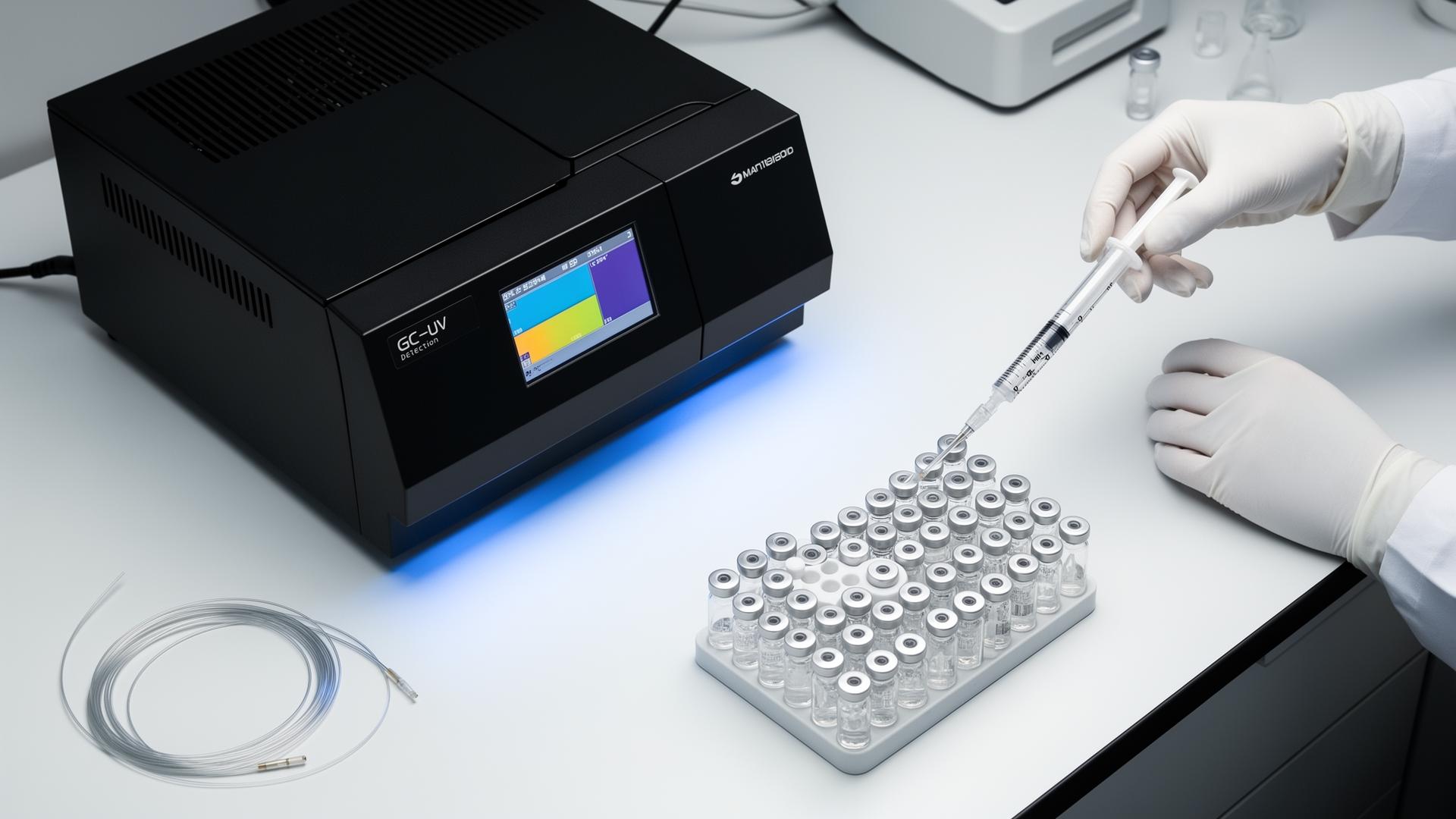
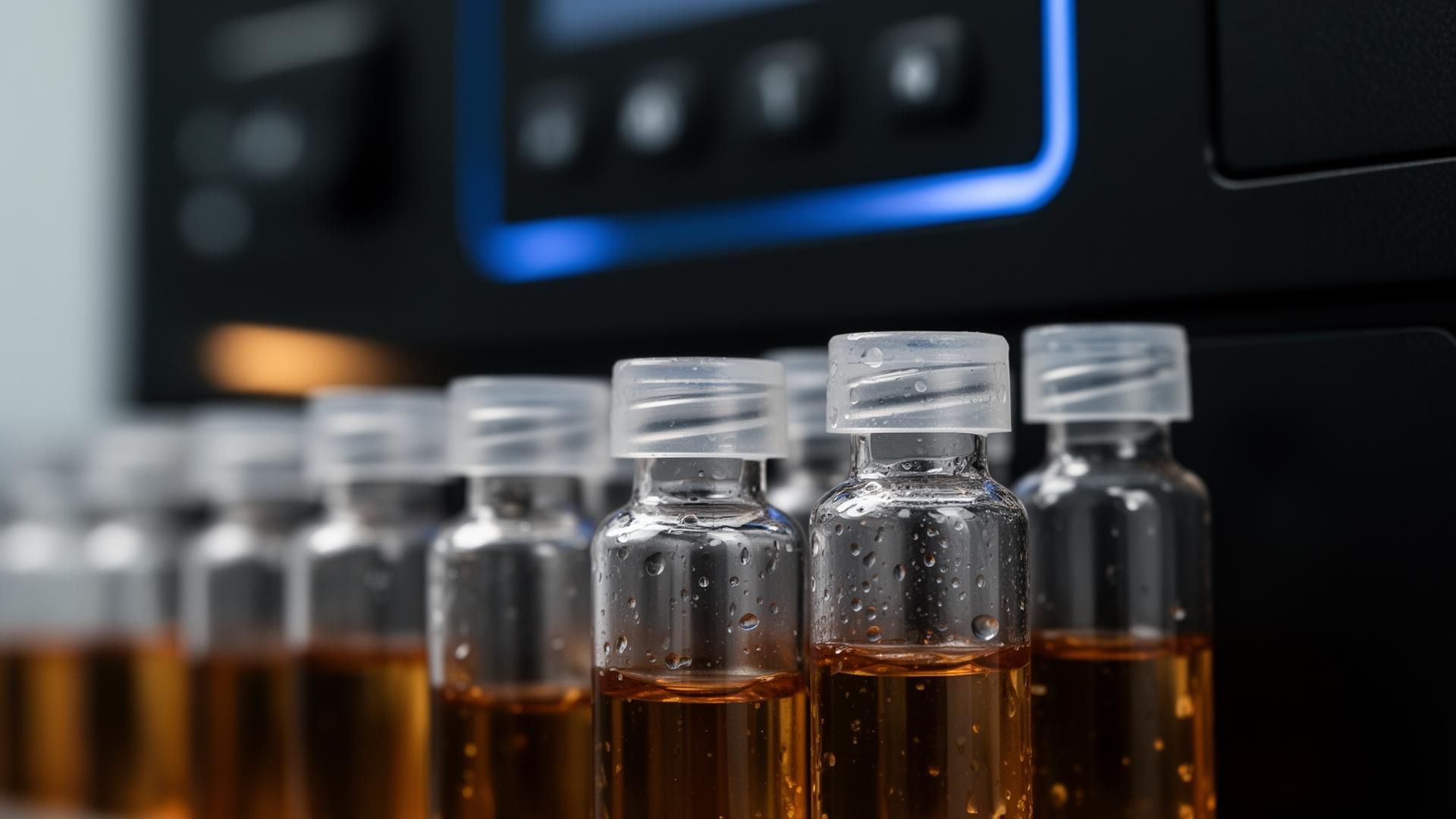
A short, honest explanation of how vacuum-UV performance is bounded — and why a single hard number would mislead more than it informs.
N₂, O₂, CO, CO₂, CH₄, light alkanes — invisible to FID and HPLC-UV, but each shows a distinct vacuum-UV fingerprint.
CFCs, HFCs, chlorinated C1–C2 species — strong σ→σ* bands enable class-level ID and isomer separation that GC-MS struggles with.
Linear vs. branched alkanes, cis/trans olefins, cyclic isomers — UV spectra resolve structural differences MS leaves ambiguous.
Compliance notePublished wavelength ranges, detection limits, and spectral performance figures are nominal and vary by analyte, matrix, carrier-gas purity, flow-cell configuration, and lamp condition. They are not guaranteed for any specific application without a Labio configuration review and feasibility scan against representative samples. Contact our applications team before specifying INSCAN for regulated or contractually-bound performance criteria.
Labio a.s. is a detection-technology company built around vapor-phase deep UV spectrometry coupled to gas chromatography. Our GC-UV platform unambiguously identifies positional and geometric isomers, classifies compound families, and quantifies via Lambert-Beer — at atmospheric pressure, without vacuum pumps. We commercialize the technology through licensing and partner-led co-development.
Our team of optical engineers, chromatographers and application chemists has built the GC-UV platform end to end — from the deep-UV light source and atmospheric-pressure absorption cell down to the spectral libraries and quantification workflows. This vertical integration lets us license the technology with full reference designs and support partners through method development, hardware integration and validation.
We work with instrument OEMs, contract laboratories and industrial end-users on two commercial paths: out-licensing of the GC-UV detection technology, and co-development of application-specific GC-UV products. Our reference platform, INSCAN, demonstrates the capabilities of the technology in pharma, petrochemical, environmental, food, fragrance, forensic and clinical breath applications.